
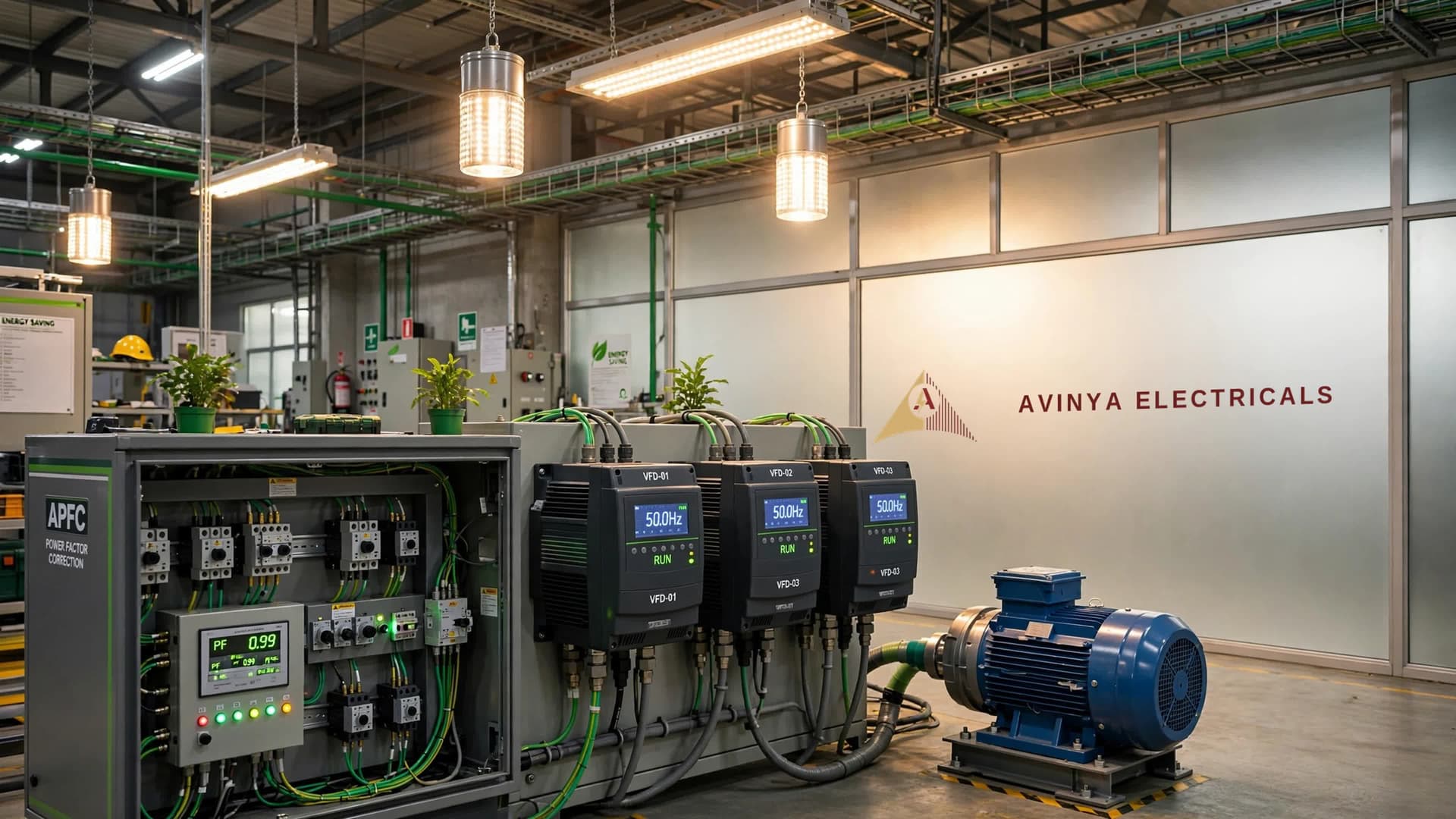
How to Reduce Your Factory's Electricity Bill: The 2026 Energy Efficiency Guide
Electricity is the silent partner in every factory's P&L — typically 15 to 40% of operating cost in manufacturing. And it keeps getting more expensive. The good news: most factories waste 10 to 30% of the power they pay for, and the fixes are neither exotic nor expensive.
Energy efficiency is also the biggest industrial trend of 2026. At the recent CII Energy Efficiency Summit, Indian industry committed Rs 3,590 crore towards electrification, process improvement, waste-heat recovery and digitalisation in a single year. Energy efficiency is no longer a "green" checkbox — it is a direct profit lever.
This guide covers 7 proven, practical measures to reduce your factory's electricity bill, with realistic savings numbers and the exact equipment each one needs.
Why Is Your Factory's Electricity Bill So High?
Before fixing the bill, understand what inflates it. In most Indian factories the bill has four parts: energy charges (per kWh), demand charges (per kVA of maximum demand), power factor penalty or incentive, and time-of-day surcharges. The biggest avoidable wastes are:
- Poor power factor — penalties for PF below 0.9, plus higher kVA demand charges
- Motors running at full speed on part load — pumps, fans and blowers throttled by valves and dampers
- Old, inefficient motors — rewound or IE1 motors drawing more current for the same work
- Outdated lighting — metal halide and tube lights burning 12+ hours a day
- Inefficient heating — oversized or degraded heaters on extrusion and moulding lines
- Invisible waste — idle machines, compressed-air leaks, duplicate switchgear heating up panels
Every item on this list has a fix. Here are the seven that pay back fastest.
1. Fix Your Power Factor With an APFC Panel
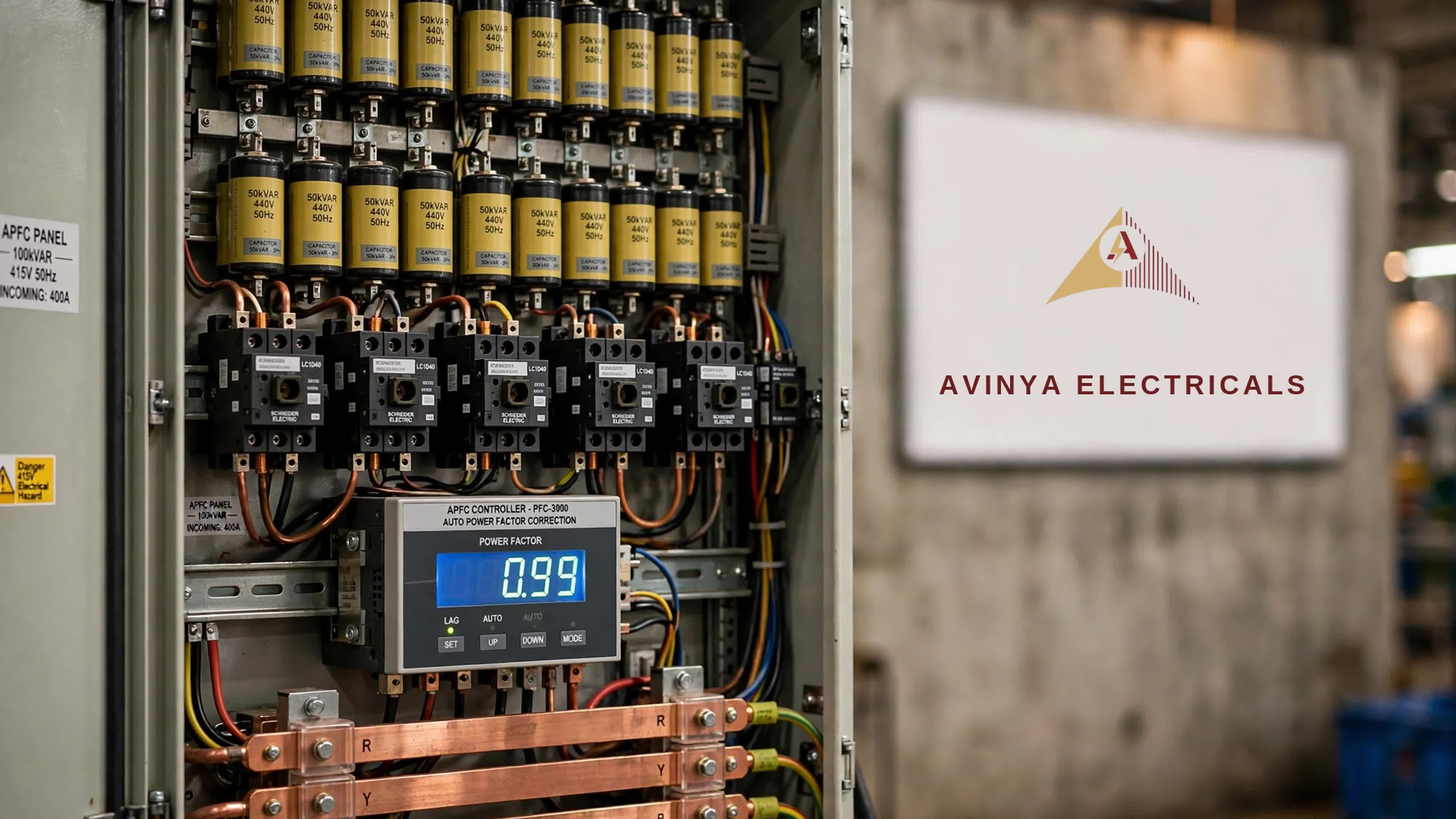
This is the single fastest payback in industrial energy saving. Most state utilities penalise power factor below 0.9 and reward PF above 0.95 with incentives. An APFC (Automatic Power Factor Correction) panel with capacitor banks and an intelligent controller automatically maintains your PF near unity — typically 0.99.
The result: penalty eliminated, incentive earned, and lower kVA demand (which cuts your demand charges too). A correctly sized APFC panel often pays for itself in 6 to 12 months. Size the capacitor bank from your actual load study, not a thumb rule — and use a panel with detuned reactors if your plant has significant harmonics from VFDs and welders.
2. Put VFDs on Every Variable Load
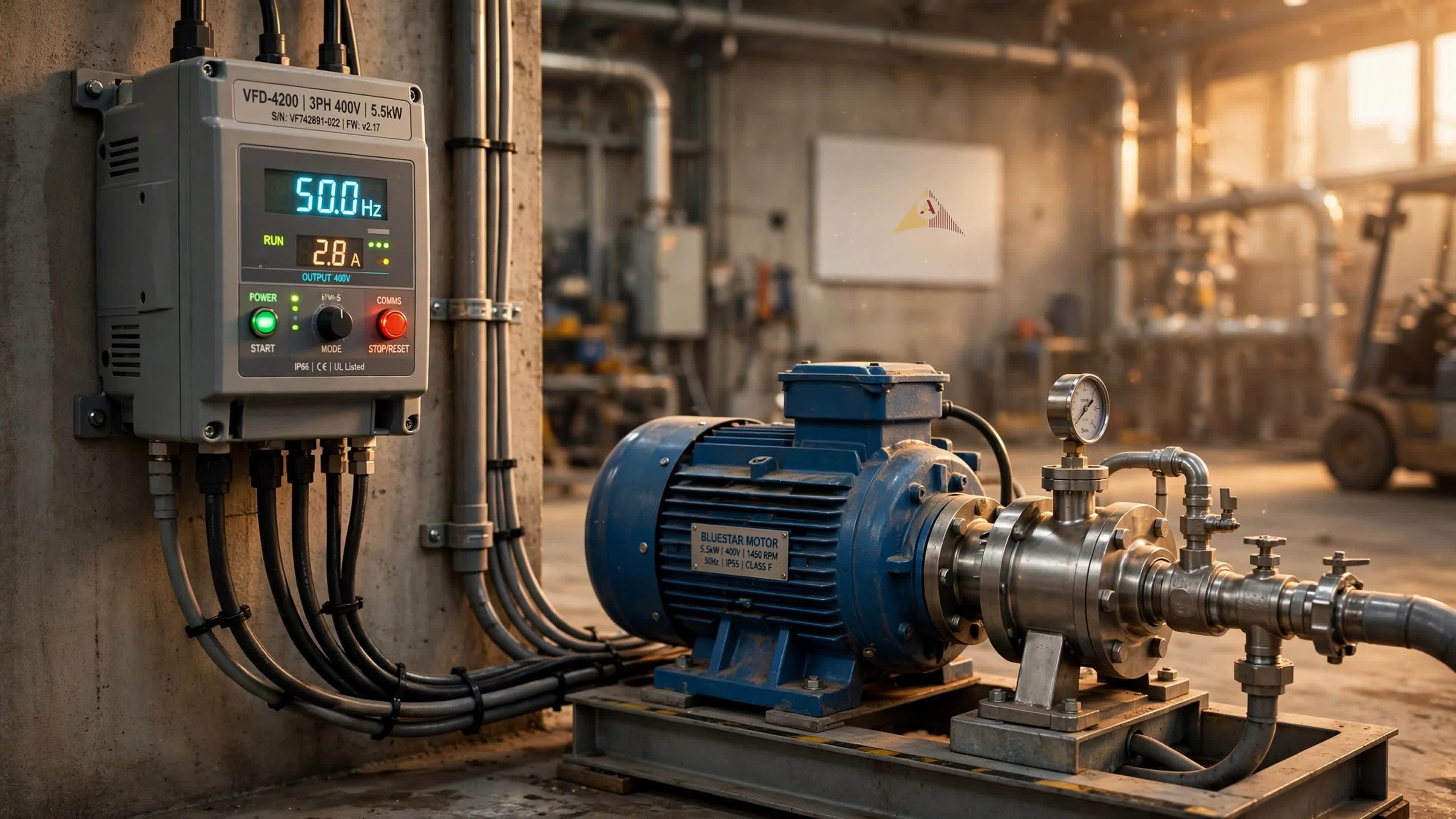
Motors consume roughly 70% of industrial electricity — and a huge share of that is wasted. A pump or fan running at full speed while a valve throttles its output is burning money. A VFD (Variable Frequency Drive) matches motor speed to actual demand, and the physics is brutal in your favour: power consumption drops with the cube of speed. Running a fan at 80% speed uses roughly half the energy.
Target first: cooling towers, blowers, exhaust fans, pumps, compressors and conveyor lines with varying loads. Typical savings: 20 to 50% on the driven load, with payback often under 18 months. Buy VFDs from authorised sources with proper harmonic filters — cheap drives create the harmonics problem your APFC panel then has to solve.
3. Upgrade to IE3 / IE4 Efficiency Motors
If your plant still runs old IE1 motors — or worse, motors that have been rewound multiple times — you are paying an efficiency tax every hour. An IE3 premium-efficiency motor is typically 2 to 5% more efficient than an IE1 of the same rating. That sounds small until you multiply it by 8,000 running hours a year: a 15 kW motor upgrade can save 3,000+ kWh annually.
Prioritise motors that run continuously: process pumps, compressors, extruder drives, HVAC. Replace on failure at minimum; for 24x7 critical motors, proactive replacement usually beats waiting for burnout.
4. Switch to LED Highbay Lighting
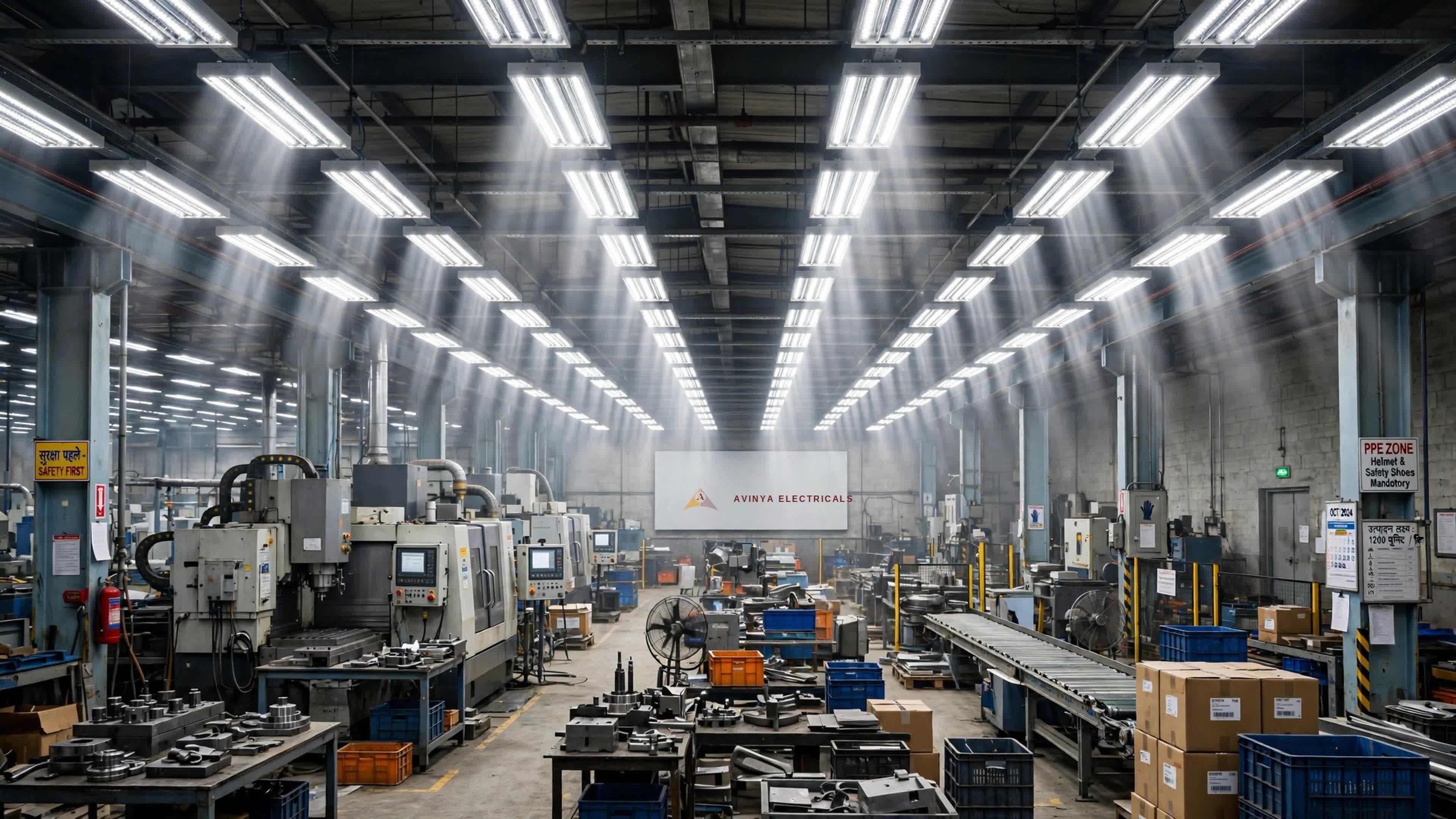
Factory lighting runs 12 to 24 hours a day, making it one of the fastest lighting paybacks in industry. Replacing 250W metal halide highbays with 100–120W LED highbays cuts lighting energy by 50 to 60% while improving lux levels and eliminating the warm-up delay and frequent lamp failures. Add occupancy and daylight sensors in warehouses and low-traffic zones for another 10 to 20% on top. Typical payback: 8 to 14 months.
5. Make Your Heating Efficient
On plastics extrusion, injection moulding, blow moulding and packaging lines, heaters are major power consumers — and degraded heaters are silent wasters. Ceramic band heaters transfer heat more efficiently than old mica bands at high temperatures and hold up better under thermal cycling; correctly sized cartridge heaters with proper fit eliminate air gaps that waste energy. Match watt density to your process, replace heaters that have lost clamping force, and insulate barrels properly. In heating-intensive plants this alone can cut heater energy use by 10 to 20%.
6. Audit First, Then Invest
You cannot manage what you do not measure. A proper energy audit — or even a week of submetering on your biggest feeders — reveals exactly where power goes: which motor, which line, which shift. Portable power analysers and panel-mounted energy meters cost little and expose surprises: the "small" air compressor running 24x7, the idle furnace holding temperature all weekend, the 30% overloaded cable running hot. Many plants find their first 5 to 10% savings from audit findings alone, before spending on any equipment.
7. Kill the Hidden Waste
The unglamorous stuff adds up: machines left running during breaks and shift changes, compressed-air leaks (a single 3mm leak can cost thousands per year in compressor power), oversized equipment running at 40% load, and duplicate or degraded switchgear heating up panels. A monthly walkthrough with a thermal camera and a clamp meter finds most of it. Fix the leaks, right-size the equipment, and put idle loads on timers or interlocks.
What Can You Realistically Save?
Measure | Typical Saving | Payback Period
APFC panel (PF 0.8 → 0.99) | Penalty + incentive + lower kVA demand | 6–12 months
VFDs on pumps/fans/blowers | 20–50% on driven loads | 12–18 months
IE3 motor upgrades | 2–5% per motor, 24x7 adds up | 12–24 months
LED highbay retrofit | 50–60% of lighting energy | 8–14 months
Efficient heating | 10–20% of heater energy | 6–12 months
Audit + leak fixes | 5–10% with minimal spend | Immediate
Combined, a serious efficiency program typically cuts a factory's electricity bill by 15 to 30% — often the difference between a thin quarter and a healthy one.
Buy Genuine — Efficiency Dies With Duplicates
One warning: every measure above depends on genuine equipment performing to its nameplate. A duplicate "IE3" motor that is really an IE1 casting, a VFD with fake ratings, or undersized-copper cables running hot will erase your projected savings and create safety risks. Buy from authorised dealers, insist on GST invoices and test certificates, and verify efficiency claims against the manufacturer's datasheets.
Why Source From Avinya Electricals?
- Genuine stock from 40+ MNC brands — Polycab, Havells, Legrand, ABB, Siemens, Crompton, L&T and more
- Efficiency range in stock: APFC panels, VFDs, IE3 motors, LED highbays, ceramic band heaters, energy meters
- Technical help sizing APFC capacitor banks, selecting VFDs and right-sizing motors for your load
- Wholesale + retail pricing with transparent quotes within 1 hour
- Same-day dispatch from ready local stock, proper GST invoicing and warranty support
Avinya Electricals has served 300+ manufacturing and infra clients for over 5 years on exactly these principles.
Frequently Asked Questions
Q1. What is the fastest way to reduce a factory's electricity bill?
Fix power factor with an APFC panel — it eliminates PF penalties, earns incentives and reduces kVA demand charges, usually paying for itself in 6–12 months.
Q2. How much can a VFD really save on a motor?
On variable loads like pumps, fans and blowers, 20–50%. Power drops with the cube of speed — running a fan at 80% speed uses roughly half the energy.
Q3. Are IE3 motors worth the extra cost over IE1?
Yes for motors running long hours. A 15 kW IE3 motor can save 3,000+ kWh per year versus IE1 — payback typically within 1–2 years on continuous duty.
Q4. What is a good power factor for a factory?
Maintain 0.99 with an APFC panel. Below 0.9 you pay penalties in most states; above 0.95 you typically earn incentives.
Q5. Do you supply energy-saving equipment with technical support?
Yes. Avinya Electricals stocks APFC panels, VFDs, IE3 motors, LED highbays, efficient heaters and energy meters, with technical help for sizing and selection — quotes within 1 hour of enquiry.
Conclusion
Reducing your factory's electricity bill is not one big project — it is seven small ones, each with its own payback. Start with the APFC panel and an energy audit this quarter, add VFDs and LED lighting next, and upgrade motors and heaters on their natural replacement cycle. Within a year, a 15–30% lower bill is a realistic outcome.
Get a free quote today. Call or WhatsApp +91 8000529452, or email [email protected] — quotes within 1 hour, genuine stock, best prices, fast dispatch.